Blog
·
·
5 mins
TL;DR
The everyday language your team uses with 1099 drivers can directly impact your worker classification compliance — even if your contracts are airtight.
Terms like “hire,” “supervisor,” and “shift” signal an employer-employee relationship to regulators
Emails, texts, and dispatcher logs are all discoverable in audits and legal proceedings
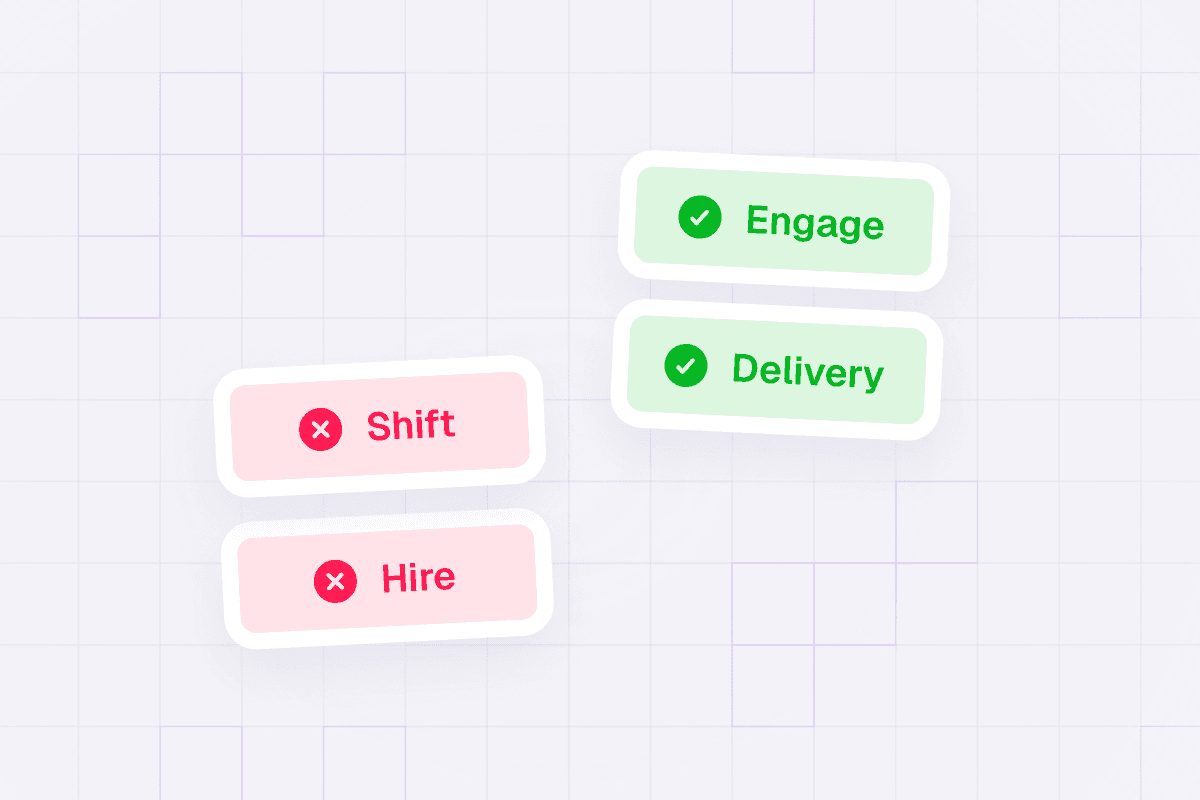
Swapping to contractor-friendly language (e.g., “engage,” “liaison,” “availability”) is one of the simplest ways to reduce misclassification risk
Dispatchers and admins are your biggest compliance risk because they communicate with drivers daily
Why terminology shapes legal classification, and how small word choices can create big compliance risks.
When working with a 1099 driver network, most companies focus on contracts, onboarding, insurance, and workflows. But there’s one area often overlooked that is just as important to regulators: the everyday language your internal teams use when communicating with contractors.
Under both IRS and DOL guidelines, the words employers use can reveal how they actually view the relationship. Subtle shifts, like calling a contractor a “new hire” or referring to a dispatcher as a “supervisor,” can be interpreted as indicators of control, blurring the line between contractor and employee.
Why Language Matters in Worker Classification
Courts, regulators, and plaintiffs’ attorneys often examine the totality of the working relationship, which includes:
Contracts
Onboarding
Workflows
Payment records
Communications and messaging
Using employee-style language can weaken even a strong independent contractor agreement.
GigSafe Tip: Regulators scrutinize your communications carefully. Do they suggest that you control how, when, or where a driver works? If so, that language can be used as evidence of worker misclassification. Every SMS, text message, email, and in-app communication is discoverable in regulatory investigations and legal proceedings. By ensuring that all communications reinforce the independent status of workers, companies can proactively protect themselves and position themselves to win.
Words That Signal Employment (and Should Be Avoided)
Certain words create employer-employee implications because they imply hierarchy, supervision, or control. These include:
Employee-coded terms:
Hire / Hired
Supervisor / Manager
Schedule / Shift
Report to / Check in with
Timecard / Timesheet
Position / Job / Role
Disciplinary Action / Write-up
Time off / PTO
Even casually using these terms can create legal risk.
Preferred Contractor-Friendly Language
Replacing employee-oriented terminology with business-to-business language helps reinforce independence and clarify the nature of the relationship.
Contractor-compliant alternatives:
Engage / Contract / Retain instead of “hire”
Liaison / Coordinator instead of “supervisor”
Availability / Window instead of “shift”
Confirm “accepted opportunity” instead of “report to duty”
Invoice / Deliverables instead of “timecard”
Scope of work instead of “job description”
Contract modification instead of “discipline”
These terms reflect a relationship based on mutual agreement, not control or employment.
GigSafe Tip: Choose words that reinforce independence and mutual agreement and not control.
Dispatcher and Admin Communication: Where Misclassification Often Starts
Dispatchers and administrative staff typically interact with drivers daily, making them the most important gatekeepers of compliant communication. But they also tend to:
Set schedules
Provide instructions
Check work status
Issue reminders
Route drivers
Monitor performance
If they use employee-coded language while doing so, the contractor relationship may appear to function like employment, even if the business didn't intend it.
Common high-risk phrases:
“You need to be at your shift by 7 AM.”
“Your supervisor needs an update.”
“We’re hiring more drivers next month.”
“Make sure you follow company procedures.”
Lower-risk alternatives:
“Are you available for a run starting at 7 AM?”
“Your liaison has a question.”
“We are engaging additional contractors.”
“Please review the project guidelines.”
GigSafe Tip: Small changes make a major difference. Train dispatchers and administrative teams to think in business-to-business terms, not employer-employee terms.
Contracts Matter, But Communication Seals the Deal
Even the most carefully drafted independent contractor agreement can be undermined by communications that contradict it.
Regulators routinely request:
Emails
Text messages
Dispatcher logs
Routing instructions
Policy updates
Call notes
If these records show employee-style terminology, it can be used to prove control, which is one of the key tests the IRS and DOL use to determine misclassification.
GigSafe Tip: Train your dispatchers and admins to align communication with the contractor relationship reflected in the contract.
Creating a Culture of Compliant Communication
Organizations rarely misclassify intentionally; it typically happens because of inconsistent messaging and a lack of internal guidelines.
To strengthen compliance culture:
Train dispatchers and admins. Provide clear examples of compliant vs. risky language.
Audit communication periodically. Look for patterns of employee-coded terminology.
Align written and verbal communication. Scripts, text templates, and email formats should reinforce contractor independence.
Use standardized terminology across the company. If you refer to contractors differently in different departments, inconsistencies may raise red flags in an audit.
Update contracts to reflect compliant language and make sure everyone uses it. Contract language is useless if internal communication contradicts it.
“The language your organization uses every day plays a critical role in shaping how your contractor relationships are viewed legally. By training teams to use accurate, compliant terminology, you can preserve contractor autonomy, reduce exposure, and build sustainable gig networks.” - Adam Dodge, VP of Compliance
Frequently Asked Questions
Why does the language we use with 1099 drivers matter for compliance?
Courts, the IRS, and the DOL look at the totality of the working relationship — not just contracts. If your internal communications use employee-style terms like “supervisor,” “shift,” or “hired,” it can be interpreted as evidence of control and used to argue misclassification, even if your contractor agreement is airtight.
What are examples of employee-coded terms to avoid?
Common risky terms include “hire,” “supervisor,” “schedule,” “shift,” “report to,” “timecard,” “job description,” “disciplinary action,” and “PTO.” These imply hierarchy and control, which are hallmarks of an employment relationship.
What should we say instead?
Use business-to-business language: “engage” or “retain” instead of “hire,” “liaison” or “coordinator” instead of “supervisor,” “availability” instead of “shift,” “invoice” instead of “timecard,” and “scope of work” instead of “job description.”
Why are dispatchers and admins a key compliance risk?
They interact with drivers daily — setting availability, confirming runs, and routing deliveries. Because they communicate the most frequently, they’re the most likely to slip into employee-style language, which can make the contractor relationship look like employment in practice.
Can a strong independent contractor agreement protect us if our communications don’t match?
Not reliably. Regulators routinely request emails, texts, dispatcher logs, and call notes. If those records contradict your contract by showing control-oriented language, the agreement can be undermined in an audit or legal proceeding.
How can we build a culture of compliant communication?
Train dispatchers and admins with clear examples, audit communications periodically for risky language, standardize terminology across departments, and align text templates and scripts with contractor-friendly phrasing.
Contact GigSafe to help ensure your language, systems, and workflows all work together to keep your business protected.