Blog
·
·
6 mins
TL;DR
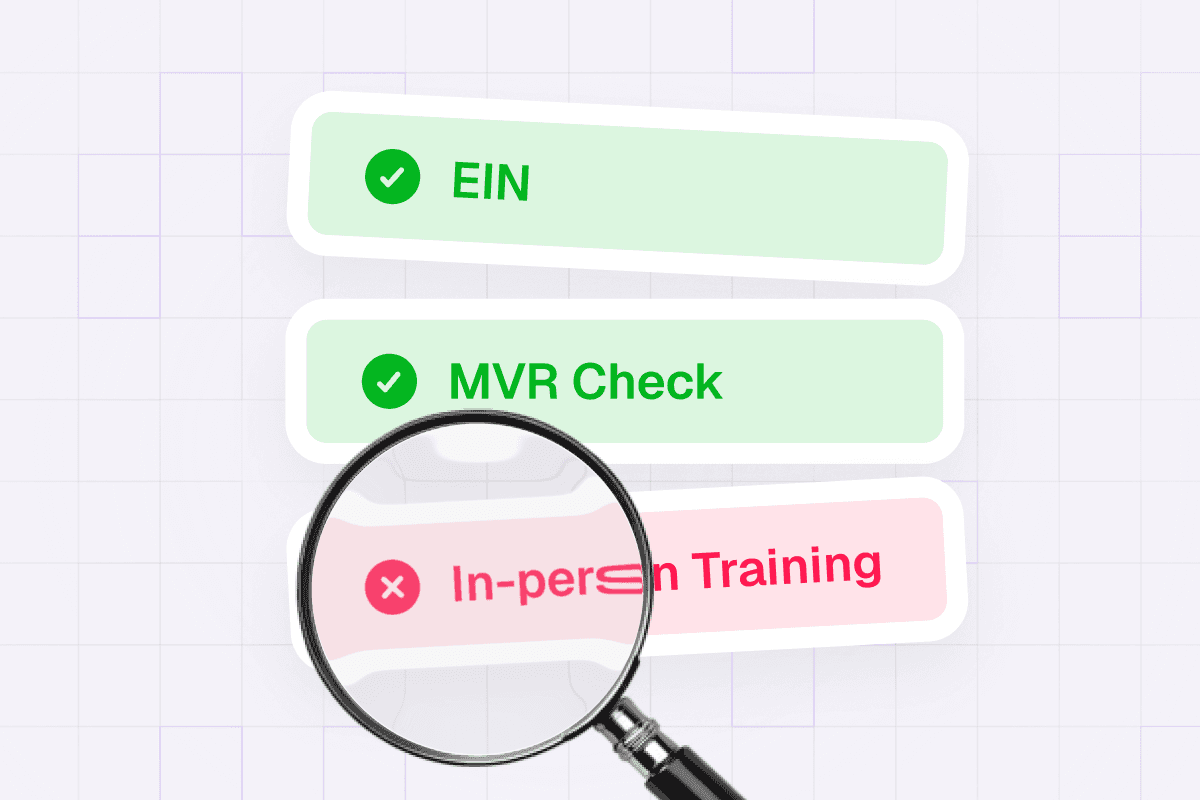
Regulators look at your onboarding process early in a misclassification lawsuit, and if it resembles traditional hiring (instructor-led training, HR-style approvals, employee orientation), that’s a problem regardless of what your contracts say. Below, we break down what compliant 1099 onboarding actually looks like, the specific steps that create risk, and how to audit your workflow so it holds up under scrutiny.
How to qualify and verify 1099 drivers without creating employer-employee control indicators
Onboarding is one of the earliest signals regulators review when determining whether a contractor is truly independent or functioning like an employee. As companies scale 1099 driver networks, it becomes easy for contractor onboarding to drift into traditional hiring practices. Regulators, however, treat your onboarding workflow as evidence of how you manage the relationship.
GigSafe Tip
Treat contractor onboarding as part of your compliance strategy and not an administrative task. If it looks like hiring, it can likely create risk.
Why Contractor Onboarding Matters
Organizations often focus on classification decisions but overlook onboarding, even though it can strongly indicate control. When your contractor process mirrors employee hiring (mandatory training, multi-step approvals, or employee-style orientation) it may signal an employer-employee relationship.
Misaligned onboarding can lead to:
Misclassification findings
Co-employment liability
Wage and hour disputes
Workers being deemed employees for Unemployment, Workers’ Comp, tax or benefits
Increased exposure during audits
GigSafe Tip
Review your onboarding from an outsider’s perspective. Ask: “Does this look like hiring?”
What Compliant Contractor Onboarding Should Do
A compliant 1099 onboarding workflow should validate qualifications and not manage performance or dictate work methods. The goal is to gather required documents, confirm safety standards, and outline expectations while preserving contractor independence.
Effective contractor onboarding focuses on:
Qualification: ensuring the contractor meets requirements
Verification: collecting documents such as MVRs, insurance proof, or licenses
Safety information: providing expectations without step-by-step training
Documentation: recording contractor-supplied information, not assigning internal workflows
GigSafe Tip
Require contractors to provide their own business documentation such as insurance, licenses, and equipment information. This helps reinforce their status as independent operators.
Avoiding Hiring Indicators
The boundary between onboarding and hiring becomes blurred when organizations inadvertently introduce elements of control. Regulators pay close attention to employee-like steps, including:
Mandatory, instructor-led training
Granting internal employee logins
Orientation that dictates how work must be performed
Allowing contractors to use company equipment before qualification
Multiple approval layers resembling HR hiring processes
These actions suggest the contractor is being treated like an employee rather than an independent business.
GigSafe Tip
Keep onboarding informational and not instructional. Share what is required and not how to do the work.
Key Components of a Compliant 1099 Driver Onboarding Workflow
1. Contractor Inquiry. Onboarding should collect business information such as EIN, insurance, and equipment details (uploaded by the contractor) and not employee-style personal history or resumés.
2. Motor Vehicle Record (MVR) Checks. MVR checks confirm safety eligibility. They should be framed as qualification criteria rather than ongoing performance monitoring.
3. Insurance Uploads. Contractors should provide proof of their own insurance. This is one of the clearest indicators that they operate independently.
4. Digital Orientation Workflows. Orientation should focus on expectations and safety requirements. It should not replicate employee onboarding or include skills training.
GigSafe Tip
A self-guided online orientation is the better option. It delivers information without implying employer control.
Why Onboarding Needs Leadership Attention
Onboarding helps shape how contractors perceive your organization from day one and how regulators perceive your relationship. A well-designed workflow helps strengthen classification decisions, reduce risk, and prevent inconsistencies across teams and locations.
Proper onboarding:
Reinforces independence
Reduces the appearance of control
Improves clarity and contractor engagement
Protects against misclassification and co-employment claims
GigSafe Tip
Make onboarding part of your formal risk plan. Leadership should periodically review the workflow for compliance alignment.
A Smarter Approach to Contractor Onboarding
A strategic onboarding strategy begins by asking:
Are we qualifying a business or hiring a worker?
Does our documentation support independence?
Would a regulator interpret our workflow as hiring?
Organizations that do this well use clear, consistent rules, avoid employee-style processes, document their decisions, and keep an eye on workflows as contractor roles change.
GigSafe Tip
Conduct an annual “onboarding audit.” Review your workflow from a regulator’s perspective to identify steps that look too much like hiring.
Frequently Asked Questions
What’s the difference between onboarding a contractor and hiring an employee?
The core difference is intent. Contractor onboarding should answer “is this business qualified?” while employee hiring answers “is this person the right fit for the role?” If your process focuses on qualifications and documentation rather than training and integration, you’re on the right track.
What onboarding steps are most likely to trigger misclassification risk?
Mandatory instructor-led training, granting employee system access, dictating how work is performed, providing company equipment, and multi-layer approval processes that resemble HR hiring workflows are possible triggers.
What documents should I collect during 1099 contractor onboarding?
Business-level documentation: EIN, proof of insurance, licenses, equipment details, and motor vehicle records. Avoid collecting résumés or employee-style personal history to keep a clear separation.
How often should we review our contractor onboarding workflow?
At least annually. Review the full workflow from a regulator’s perspective and check for inconsistencies across teams or locations. Revisit anytime contractor roles or processes change.
Can digital onboarding help with compliance?
Yes. Self-guided online orientation is generally recommended instead of instructor-led as it delivers information without implying employer control. Just make sure it focuses on expectations, not skills training.
If your organization works with 1099 drivers or contractors, compliant onboarding is essential to preventing misclassification and protecting your business. The GigSafe team is here to help you design workflows that reinforce independence and reduce risk while providing best-in-class speed and uncompromising quality.
Contact Us!
Contact us to learn how we can support you in building a compliant, scalable onboarding model that protects your business and your contractors.